
The following article has been written by War Tinder.
- History of the T-55S Samovar
- What was the T-55S Samovar?
- Myths and confusion surrounding the T-55S Samovar
- What happened to the T-55S Samovar?
- Conclusion
- Acknowledgements
- References
The T-55S Samovar was an upgrade of the Tiran 5Sh that competed with the Merkava Mk. 1 to become Israel’s next main battle tank (MBT) and in many ways, was better than it. So why has no one heard of it?

History of the T-55S Samovar
In 1970, the Merkava program was launched, with the first full prototype of the tank beginning trials in 1978, and the vehicle moved staggeringly quickly into production, entering service in 1979. The project had been started because originally, the IDF had wanted to buy Chieftain Mk. 4 tanks from the UK, but after the 1967 Six-Day War, the UK’s attitude to Israel changed and they refused to sell the Chieftains to them.
On the surface, this is a pretty simple story. But behind the scenes, it was much more complex. Several other tank projects competed with the Merkava to be the next MBT of the IDF, but national pride in a fully domestically-designed MBT was too great for some, and Israel Tal—the general in charge of the Merkava program—killed each and every one of them in favor of the Merkava. One of these projects was based on the Tiran 5Sh. Tiran 5Sh was the name given to Tiran 5s, which were captured T-55s put into Israeli service, upgraded with the 105 mm Sharir cannon which is a license-produced British L7A3 cannon, as well an American 12.7 mm M2HB machine gun and 2 American 7.62 mm M1919A4 machine guns, as well as other upgrades. This unique project developed by NIMDA and Rafael to upgrade the Tiran 5Sh was called the T-55S Samovar. The vehicle was named after a samovar, which is a type of Russian vessel used to boil water.
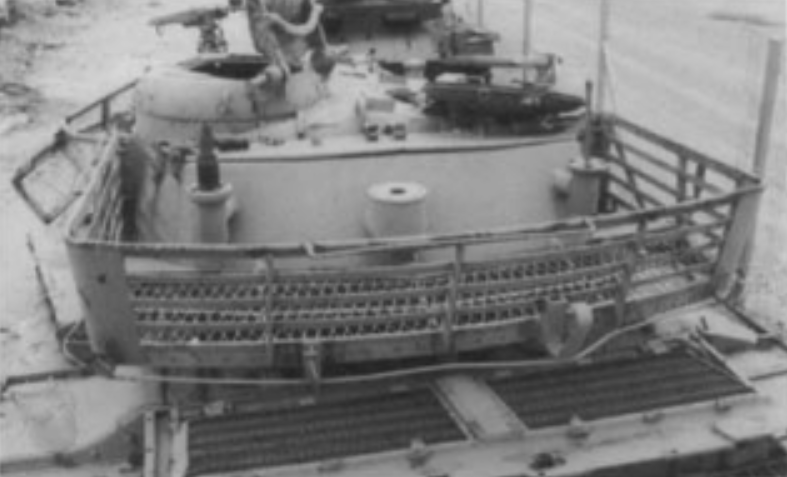
The Samovar was unveiled to the public in 1984, being intended for export, However, it had been built much earlier and had competed with the Merkava. The cancellation of the Samovar was likely out of pride, not merit, because in many ways, the Samovar was better than the earliest Merkavas. It is possible that part of the decision to kill the project was due to the aging T-55 platform. Already having been heavily upgraded to the Samovar, it lacked the breadth of further upgradability that would have been provided by an entirely new platform. However there is no evidence to support this.
Yet, while no longer set to replace or supplement the Merkava in any capacity, this was not the end of the Samovar’s life. Tests continued into 1985 with the new M413 Hetz 7 round, and Israel continued to attempt to export it. However, there were no buyers, which eventually led to the program’s complete cancellation. Yet, even this was not the true end of the Samovar, and while it never truly saw the light of day, its hull, with its improved running gear, new engine, and new transmission, acted as the basis for the Achzarit heavy armored personnel carrier (HAPC).
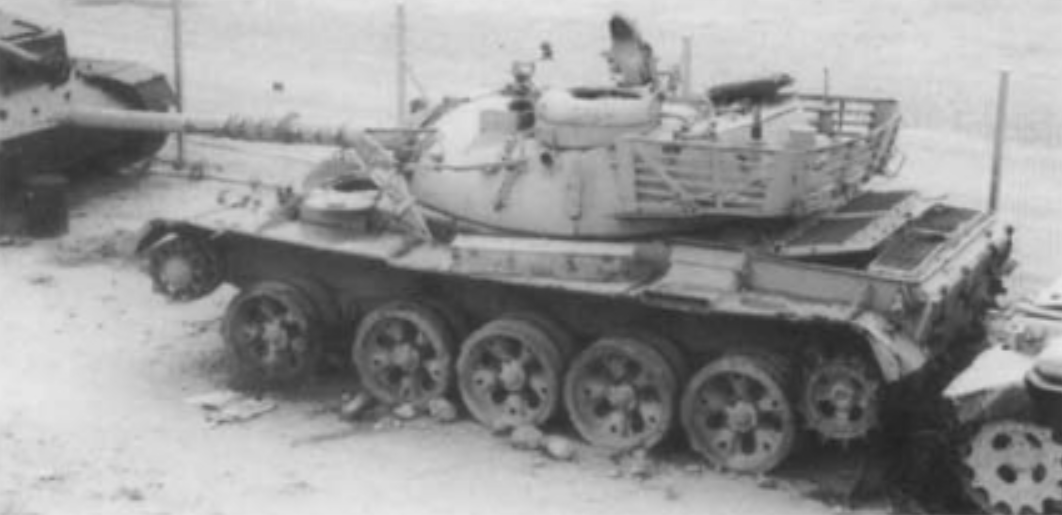

What was the T-55S Samovar?
The T-55S Samovar’s upgrade list is extensive. It features:
- A new, heavily upgraded version of the Teledyne Continental Motors 8V71T engine producing 609 hp
- A new XTG-411-4 semi-automatic hydro-mechanical transmission with 4 front gears, 2 reverse gears, and a torque converter that operated on a clutch brake steering system which did not allow for neutral steering
- An improved cooling system
- New air filters
- The SAFE fire suppression system
- Improved running gear
- A new commander’s cupola similar to the one on the American M48 designed to give the commander a much better view of the battlefield
- The new Hetz 7 APFSDS-T round
- New optics with better stabilization
- The Matador fire control system designed by Elbit Systems that featured a laser rangefinder and night vision device
- Infrared detector
- Cross-wind sensor
- A communications box that was moved to the rear exterior of the turret to make the heavily-cramped interior slightly more spacious
- New smoke grenade launchers (it appears these were never mounted but rather the Samovar just had the mounting plates for them)
- Explosive reactive armor (ERA) on the center of the upper glacis plate
- A new, large turret basket at the rear and another turret basket on the left turret cheek
This was an incredibly deep modernization of the tank that resulted in a vehicle that was not only capable, but better than the Merkava Mk. 1 in many ways. It lacked in armor compared to the Merkava Mk. 1, but in all other regards, it could do everything the Merkava could while being 20 tons lighter at a weight of 38 tons and only 1/3 of the cost.

Myths and confusion surrounding the T-55S Samovar
There are not an incredibly large number of myths surrounding this vehicle simply due to how obscure it is. Nonetheless, there are still myths surrounding this vehicle and confusion regarding certain aspects of it.
First, there is the confusion about what rounds this vehicle actually fired. This confusion stems from the only source to have reported what rounds the tank fired—The Tankograd Gazette Number 9—referring to the Samovar’s APFSDS-T round as the Hetz 2. Not to be confused with the Hetz 2 ballistic missile, the Hetz 2 APFSDS-T round has exactly 2 sources calling it that: The Tankograd Gazette Number 9 itself as well as a magazine from 1985 referring to it as the Hetz 2 with an image of the round being held by an IDF officer named Amos Katz. This image can also be found on Wikimedia Commons. This image was instrumental in identifying the Hetz 2 because with a visual of it, it was possible to compare it to other rounds and I found out that this round is much more commonly known as the M413 Hetz 7 round, license produced by Germany as DM33 and known as PPTFS M/85 LS in the Danish Army, Slpprj m/85 by the Swedish, and CL260 on the general export market. It’s not clear why M413 is called both the Hetz 2 and Hetz 7, especially since Hetz 2 would make more sense as Hetz is the name for APFSDS rounds in the IDF and M111 was the first Hetz round, though this is usually referred to as Hetz 6, with M413 being the second Hetz round. Nonetheless, the enigmatic Hetz 2 is actually just the M413 Hetz 7.

There is also a myth that has been parroted by certain sources, namely GlobalSecurity.org in an article published on May 11, 2014, claiming that there is a T-55S Samovar 1 featuring many of the upgrades listed above and only a mesh basket on the side of the turret instead of a large rear turret basket, and a less-developed Samovar 2 with unnamed differences, but supposedly of note is the large, rectangular turret basket. This is entirely false. There is no such thing as the Samovar 1 and Samovar 2, there were never 2 prototypes built, and it is incredibly unclear where this false information came from. There is only 1 prototype: the Samovar. It’s possible that the “Samovar 2” was a successive upgrade on top of the “Samovar 1,” though there is no evidence confirming it, but there most certainly were not 2 separate prototypes.
The Samovar has yet another designation myth surrounding it, though this one extends to all Tirans. Many sources refer to Tiran tanks as the Ti-67. This is not its true designation. Ti-67 was the Arab designation for all Israeli Tirans. No Israeli designation calls Tirans the Ti-67, but due to this myth, some sources refer to the T-55S Samovar as the Ti-67S Samovar, despite Ti-67S Samovar not being its real name.
What happened to the T-55S Samovar?
After 1985, the trail got murky. Not much was heard of the vehicle until 2000 when The Tankograd Gazette Number 9, which contained newly-taken images of the Samovar. These images are displayed earlier in this article in the provided pages from The Tankograd Gazette Number 9. There is also the following image taken at an unknown date but clearly in the same location as the images from The Tankograd Gazette Number 9 which shows the vehicle in an incredibly dilapidated state.

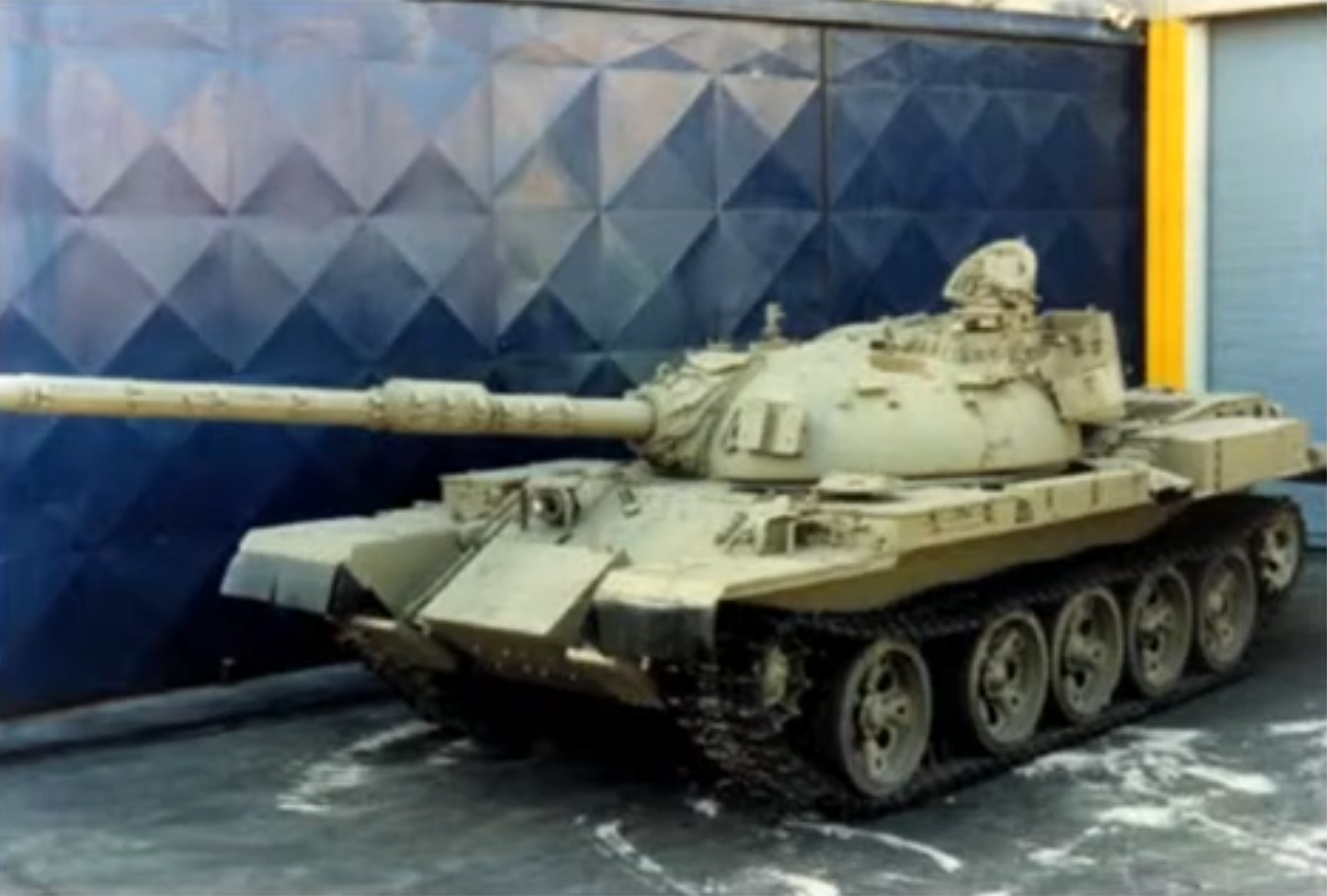
There was also a promotional video made by NIMDA from a date that isn’t fully known, though it is likely January 16, 2013. Among many other vehicles, it contains an image of the Samovar in very good condition in a showroom. However, considering it does not have the rear and left side turret baskets as well as still having the old T-55 cupola, this is likely a very early configuration of the Samovar made well before it was unveiled to the public with its images later repurposed for the promotional material. It is also very possible that this configuration is the vehicle erroneously referred to as the “Samovar 1,” with the more well-known configuration that has appeared throughout the rest of this article being the “Samovar 2.”
After that, the trail went cold again until 2005. On December 31, 2005, a forum user by the username of gm4450 on the fresh.co.il forums who in reality is Michael Mass, curator of Yad la-Shiryon, said that when he had time he was going to prepare the Samovar for display at Yad la-Shiryon. However, after a call I had with Maor Levy, Israel’s foremost historian and expert on Tiran tanks, I can confirm to you that this never ended up happening. The front of the hull says “For Latrun” on it in the images from, indicating that at some point it was intended to go to Yad la-Shiryon. But for one reason or another, it never did.
Nothing more was seen again until 2014. In 2014, historian Michael Mass published IDF Armor Series No. 8: Achzarit Heavy APC in IDF Service. As mentioned earlier, the Achzarit was based on the hull of the Samovar. On pages 7 and 8 of the book, new pictures of the Samovar taken for the book are present. Given the time it takes to publish a book and the fact that the book was published on February 14, 2014, the images were almost certainly taken in 2013. The images show that the Samovar was in a horrible state, and that was 10 years ago as of the writing of this article.

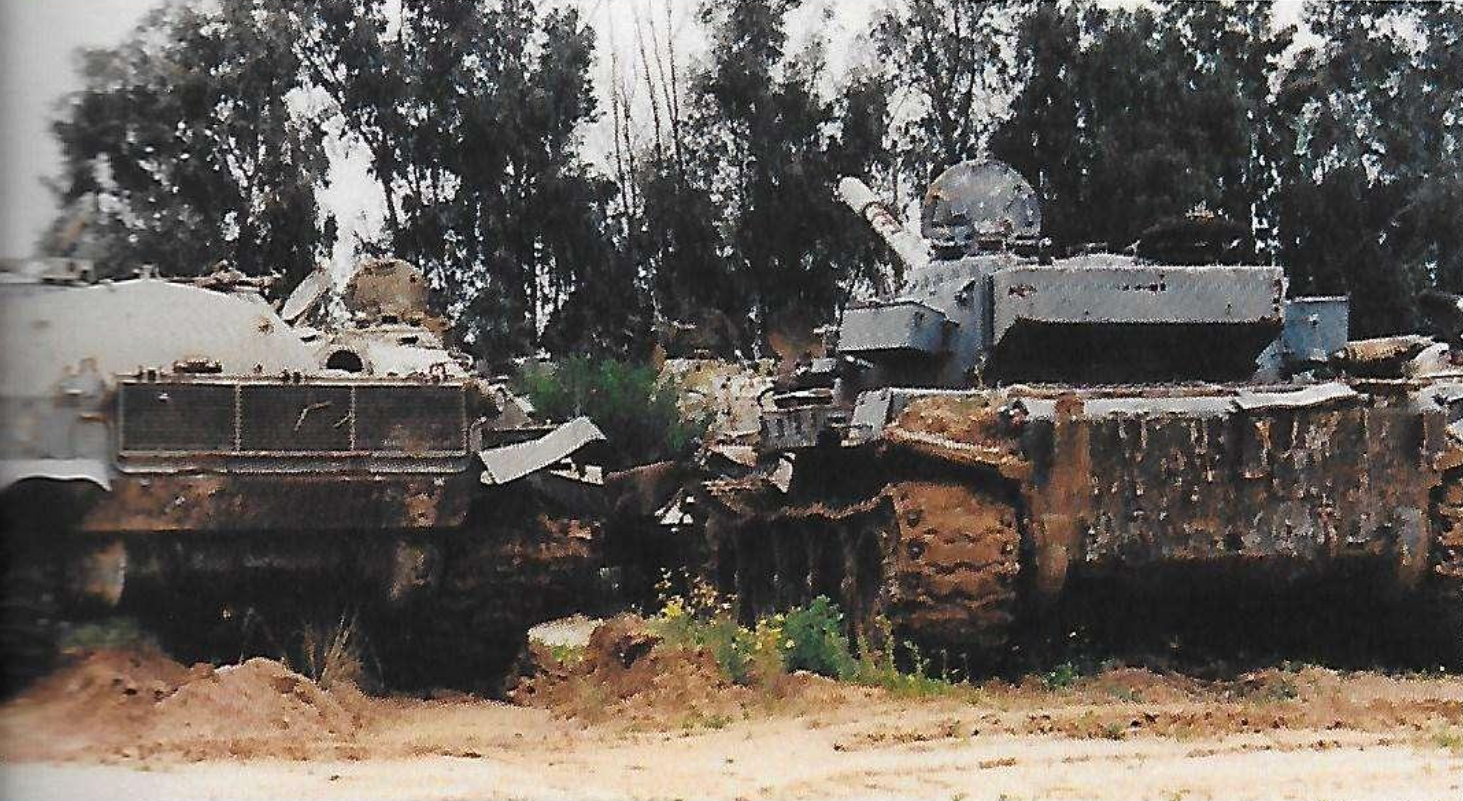
2014 is the last that has been heard of the Samovar, with the images in the book being the last known images of it. The text “For Latrun” is no longer on the vehicle, showing that whatever plans to put the vehicle in Yad la-Shiryon have died. However, interestingly, an official IDF number has been added on the bottom left of the upper glacis plate.
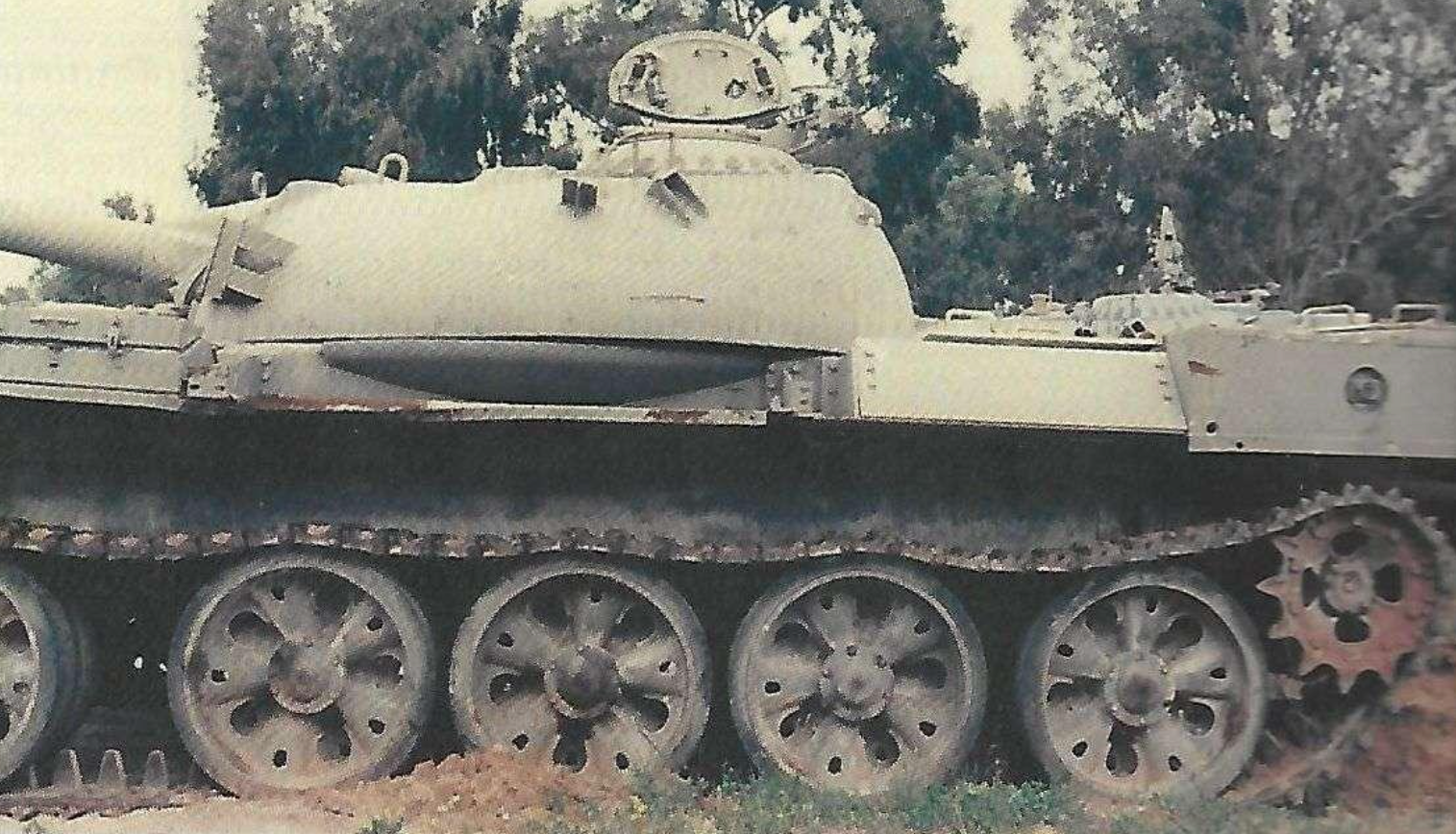
As for where the Samovar is now, there are 2 possibilities. One is that it was scrapped for parts. This is highly possible considering it appears to be at a junkyard in horrible condition and nothing has been heard of it in 2014. In my research, I tried contacting Michael Mass for more information on when and where the pictures were taken, but to no avail. The second option is that it still exists. In my call with Maor Levy, he informed me that if the Samovar still exists, it resides in the junkyard at the Plugot military base in the middle of absolutely nowhere in the Negev Desert. If it’s at Plugot, it certainly will have rotted even further beyond the nearly unrecognizable husk that it was in 2013 when the last images of it were taken.
Conclusion
The T-55S Samovar has so many twists and turns in its story that it has taken me a year to collect this research. It’s an obscure vehicle, one arguably not of much note whatsoever, and yet, it was a strong competitor to the Merkava, could have been Israel’s first export MBT, and was the basis for one of the most heavily-armored APCs in service anywhere in the world. It is a project killed by national pride that was developed into one of the prides of the IDF. It may be a historical footnote, but that is what makes it so interesting. It’s interesting because no one knows about it, and as nightmarish as the research was at times, it has uncovered so much about this fascinating tank.
Acknowledgements
I would like to provide a special thanks to Maor Levy for generously taking time to discuss with me this vehicle and its history. A huge portion of the knowledge in this article comes from him and I am incredibly grateful to him for it.
References
- Department of the Army. (1962, July 5). FIELD AND DEPOT MAINTENANCE MANUAL FOR POWER TRAIN ASSEMBLY (8351100) (ALLISON MODEL XTG-411-2A) (TM 9-2520-234-35).
- IDF Spokesperson’s Unit Photographer. (1985, October 28). Amos katz carrying the missile hetz 2 [Image]. Wikimedia Commons.
- User gm4450 (Michael Mass). (2005, December 31). This is what the tower looks like. fresh.co.il.
- Mass, M., & O’Brien, A. (2014). IDF Armor Series No. 8: Achzarit Heavy APC In IDF Service. Desert Eagle Publishing.
- NIMDA. (2013, January 16). NIMDA 16 01 13 [VIDEO]. YouTube.
- Vollert, J. (2000, July). The Israeli T-55S “SAMOVAR” Turret Concept. The Tankograd Gazette Number 9, 12-14.
 Shiryon Archive
![IDF Spokesperson’s Unit Photographer. (1985, October 28). Amos katz carrying the missile hetz 2 [Image]. Wikimedia Commons.](https://commons.wikimedia.org/wiki/Category:Amos_Katz#/media/File:Amos_katz_carrying_the_missile_hetz_2.jpg)