
I have recently watched so-called “historian” Mark Felton’s latest video regarding early Israel’s tank force, as this specific topic has been at the center of my research for a couple of years now, I could not have been more disappointed by the video, even though I started watching said video with low expectations as Felton’s reputation in tank enthusiast circles is, subpar. My English is not yet advanced enough to explain in words the sheer pain I felt as I watched the video, and the overwhelming disappointment and disgust I felt as I saw the view counter go up. My anger is immeasurable. This video has undoubtedly caused severe damage to the already fragile perception the average tank enthusiast has over early Israeli armor, I can only hope that the following refutation will help remedy this video’s horrid effects.
Just a minute and a half into the video (1:33) Felton proclaims that before Israel had even announced its independence (14.5.1948) the Jewish militias of the time had ten H35 tanks “and a couple of British Cromwell tanks”, this is wildly incorrect, first of all, the Haganah (the main Jewish militia of the time) signed a deal with France for ten H39 tanks in March 1948, however, they did not arrive until June, long after Israel announced independence furthermore, H35 and H39s are not interchangeable, as the latter received a better engine which changed the engine deck shape. photographic evidence clearly shows all Hotchkiss tanks that Israel used during the war were of the H39 type, specifically with the SA38 37 mm cannon. As for the Cromwells, these were stolen at the very end of June two weeks after the H39s arrived!

In actuality, the first Israeli tanks were the M4A2 “Meir” which is mentioned later in the video, and some R35s that were captured from Syria and later utilized by Israel, although to a limited capacity. Felton mentions the “Meir”‘s acquirement later (2:00) however even there he makes a mistake, as most Israeli historians agree the Meir was the only tank to be acquired then, via bribery. Some have confused this acquirement with the “Tamar” (Israel’s second Sherman) and said that two tanks were acquired this way, however, this is incorrect. The mistakes regarding the “Meir” don’t stop there as just a bit later (2:25) he proclaims that among the many repairs done to the “Meir”, its 75 mm M3 gun was repaired, this is a huge mistake, as in every single source the exact opposite is described, the original gun could not be repaired so a “20 mm Hispano-Suiza cannon was installed in a metal tube made to resemble the barrel”, most likely of the H.S 804 type, only in September was a replacement gun found, once it was installed the tank’s name was changed to “Mania”.
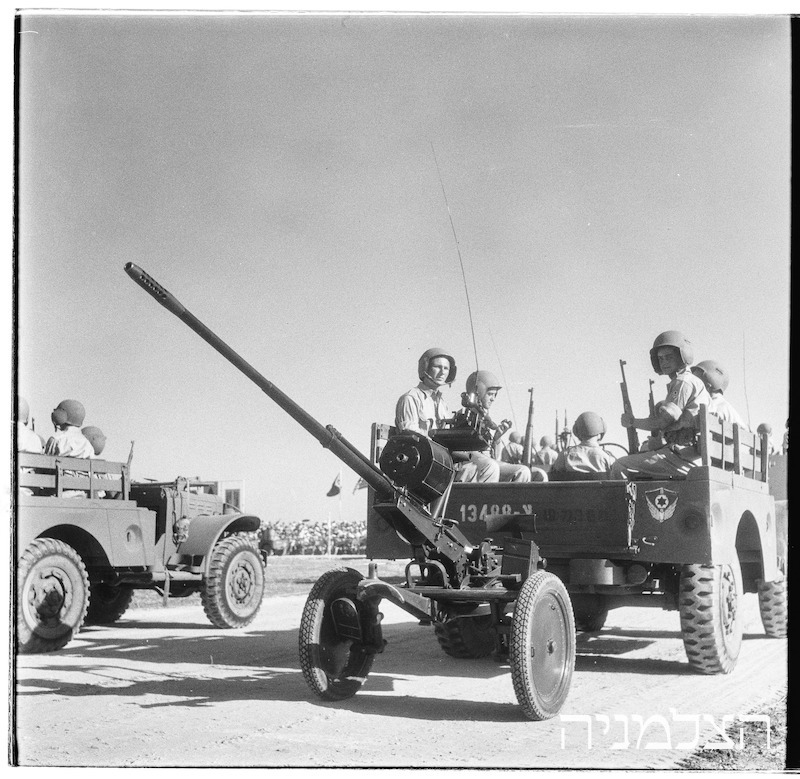
When Felton speaks of the Israeli purchase of Shermans in Italy (2:56) he shows a photograph of a scrapyard in former Palestine, not Italy, furthermore, he claims that Israel had purchased 32 Shermans in Italy, but this number has no basis in reality, Yerocham Kafkafi, which was sent to Italy to inspect and purchase Shermans in August 1948 was told to get three dozen tanks (36) however he ended up purchasing 30. As for the tank’s condition, some sources indicate that they were in fact not driveable as Felton claims, which is why repairs of the tanks started even before replacement howitzers could be located and took a large amount of effort. And no, the turrets did not have “huge gaps in them” and the guns were not missing, just disabled.

The Krupp guns (3:53) were not purchased from Romania but from Switzerland, however, some researchers claim that the cannons were originally sold from Romania to Switzerland. The Israeli Krupp M1903 guns had distinct Swiss carriages. Additionally, the reason why the Krupp Shermans did not see service during the war was not due to the length of time it took to install the guns in the tanks, it was simply that the idea came up too late, the earliest mentions I could find of this idea were from December 1948, the last combat Israeli tanks saw was in early January 1949. Additionally, only six of the thirty Shermans that Israel purchased would be converted to Krupp Shermans, another two (the aforementioned “Tamar” and the third Sherman “Ruth II”) did in fact see combat as the original 105 mm howitzers of theirs were replaced with 75 mm M3 guns

Israel never managed to operate all of the ten H39 tanks as Felton indicates (4:30), photographic analysis shows that only 8 of the 10 H39s were ever operational with the peak being seven at once. Felton made a mistake regarding how many 75 mm armed Shermans Israel had during the war (4:54) he claims that aside from the “Meir”’s 75 mm gun there were three more guns, however, the “Meir” only had a 20 mm autocannon as I previously explained, which was replaced with a 75 mm, in total only three 75 mm Shermans served during the war, “Mania” (previously “Meir”), “Ruth II” and “Tamar”.
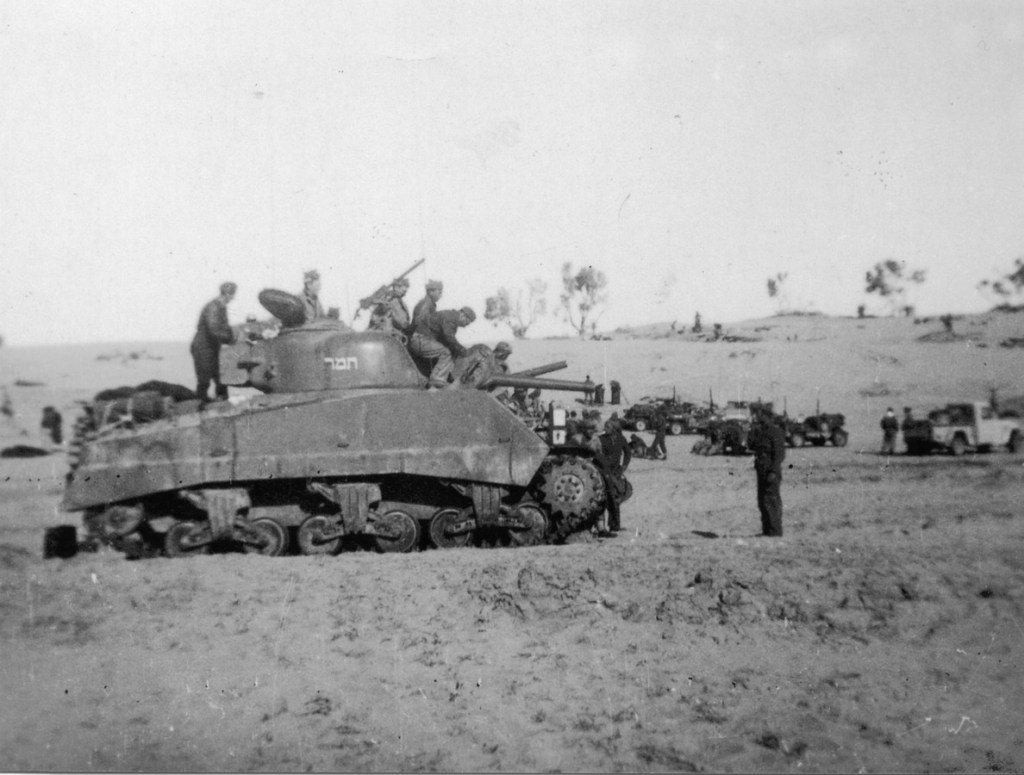
While not exactly a mistake I would like to clarify that the “Mania” was only hit in the track by an anti-tank gun (5:08) the reason it was lost was because it got stuck in the sands of Sinai and could not be retrieved, this occurred on the 29th of December 1948, the following day Israel blew it up to prevent capture.

The six Krupp Shermans were re-converted to M4 105 mm howitzers, not M3 75 millimeters as Felton claims (5:20)
M-50s were not referred to as “Super Shermans” as Felton claims (5:39), as indicated by historian Dr. Amiad Brezner’s writings the name Super Sherman was reserved for M1 76 mm armed Shermans equipped with HVSS (E8) suspension, furthermore, the M-50 utilized a long 75 mm SA50 gun, not a long 76 mm gun as Felton says.

May I note that while Felton makes it seem like Israel’s tanks were wildly outdated (7:04) the Arab tanks were just as outdated if not even more so, with the most advanced Arab of the 1948 Arab-Israeli War being a single Panzer III Ausf. N which was used by Egypt, with many tanks such as the twelve Syrian R35s being simply inferior to the Israeli H39s.

Clearly, this video was extremely poorly researched and poorly written. Most of these myths are not excusable by the language barrier as English sources on the topic, both freely online and in books have become much more common in recent years. Mark, if you read this, talk to me, shiryonarchive@gmail.com this horrid series of poorly researched videos cannot continue, you simply feed the myth monster real historians devote their lives to dismember.
Sisay E. owner of the Shiryon Archive website and discord server.
Sources:
- The Armor Craftsman, by Moshe Givati.
- Valley at War, by Assaf Agin.
- Origins of the Israeli Armoured Corps, by Amiad Brezner.
- Embargo, by Amitzur Ilan.
- Personal research done via photographic analysis.
- Wild Broncos, by Amiad Brezner.
- https://www.palyam.org/
 Shiryon Archive